The New War Front:
Digital Participation in War

Professor Andrew Hoskins’ UKRI-funded research project showing how digital participation transforms how wars are fought, experienced, remembered and forgotten.

Research Themes

Digital Participation in War

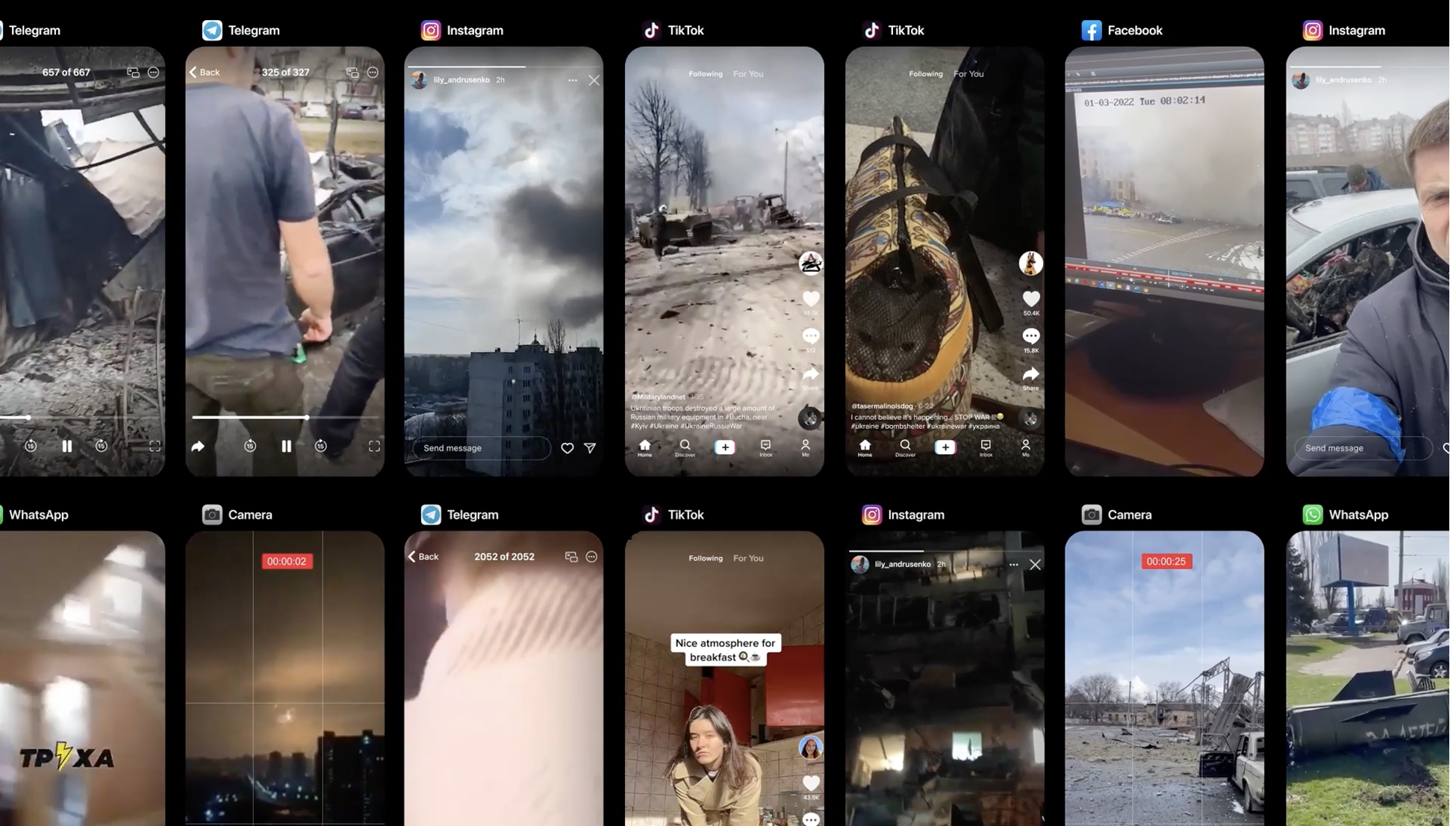
DIGITAL PARTICIPATION

How do smart devices and platforms enable allcomers to participate in warfare?

Explore theme ›
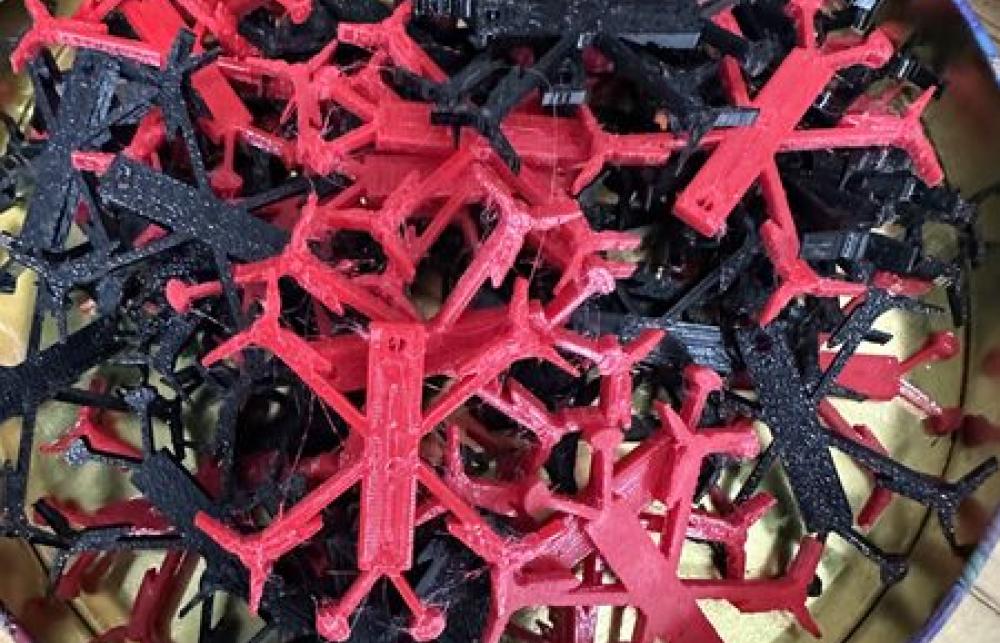
Drone Ecology and AI War

DRONE ECOLOGY AND AI WAR

How drones and AI revolutionise the character, effects and experience of war.

Explore theme ›
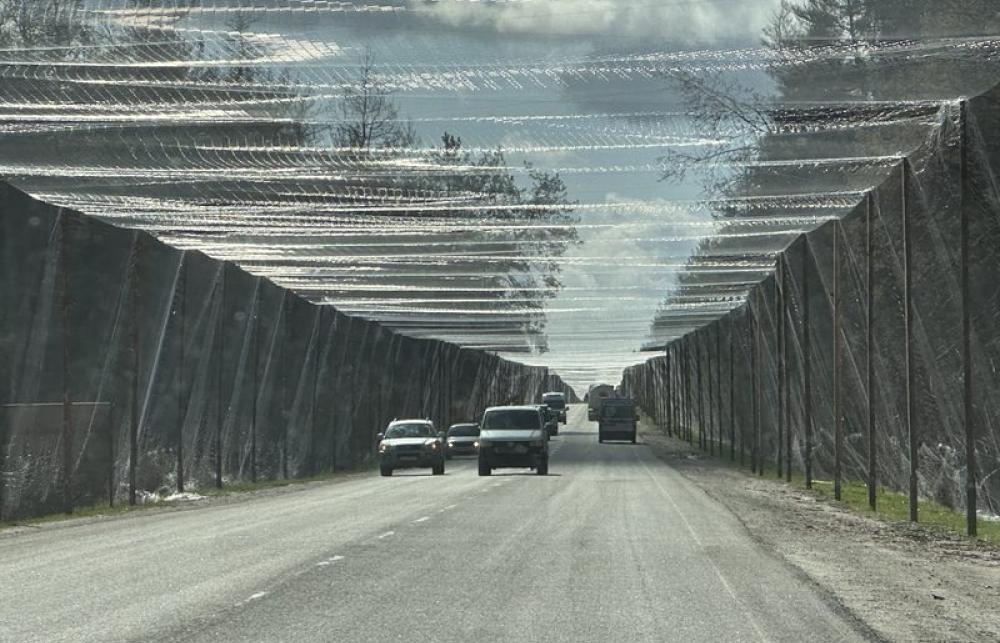
Remembering and Forgetting War

REMEMBERING AND FORGETTING WAR

How do civilians, organisations and militaries make and use the memory of war?

Explore theme ›

About

WARSHARE: The New War Front: Digital Participation in War is a five year project (2025–30) awarded as an ERC Advanced Grant and funded by UKRI (HEu ERC Advanced Grant EP/Z53335X/1) to Professor Andrew Hoskins, University of Edinburgh.

The battle over representations and perceptions of war is transformed in an era of billions of images, videos and other digital content of war being produced, shared, edited, liked, linked, fabricated and deleted on smartphones, social media platforms and messaging apps.

War in the twenty-first century is participative. People can record and document war, and unwittingly and deliberately transmit data points that can generate targets on the battlefield. Smart devices are both a way to represent war and a node in its practice.

This project will produce new interdisciplinary understanding of how and why digital participation is transforming how individuals and societies (including militaries and states) fight, experience, understand, remember and forget (perceive, explain, and de/legitimise) warfare.

The project is organised around three connected research strands:

  1. Digital participation
    How do smart devices and platforms enable allcomers to participate in warfare?
  2. Drone ecology and AI war
    How drones and AI revolutionise the character, effects and experience of war.
  3. Remembering and forgetting war
    How do civilians, organisations and militaries make and use the memory of war?

Read an introduction to the paradigm of participative war here:

https://www.researchgate.net/publication/400800032_Participative_War_the_new_paradigm_of_war_and_media

Team

Project Team

Professor Andrew Hoskins

Professor Andrew Hoskins

Principal Investigator

Professor Andrew Hoskins holds a personal chair in AI, Memory & War, in the Department of Sociology at the University of Edinburgh, UK.

His research focuses on digital participation in war, and AI, war and memory.

He is the author/editor of 11 books, including: Radical War: Data, Attention & Control in the Twenty-First Century (Hurst/OUP 2022, with Matthew Ford); Risk and Hyperconnectivity: Media and Memories of Neoliberalism (OUP 2016, with John Tulloch); Sharded Media: Trump’s Rage Against the Mainstream (with William Merrin, Palgrave 2025).

His forthcoming books out this year include: Memorybot: AI and the End of the Human Past (Polity 2026) and The AI Memory Machine: Why the Past is All Over (with Kristína Čimová and Danny Pilkington, OUP 2026).

He is founding Co Editor-in-Chief of the Cambridge Journal of Memory, Mind & Media and founding Editor-in-Chief of the Journal of Memory Studies.

andrew.hoskins@ed.ac.uk

Dr Devanjan Bhattacharya

Research Fellow

Aleksandra Butkovska

Doctoral Researcher

Partners

Mark Neville

Artist, Kyiv

Neville is a British artist who moved to Kyiv two years before the full-blown Russian invasion of Ukraine in 2022. He works at the intersection of art, documentary, and activism, searching out truly ethical roles for photography. His photographic projects have frequently made the places and demographics he portrays as the primary audience and beneficiary of his work in real terms.

He co-runs the charity called Postcode Ukraine (since 2022) combining frontline humanitarian aid deliveries with his documentary art practice.

Shona Illingworth

Artist Filmmaker

Illingworth is an artist filmmaker whose major works take the form of immersive gallery based multi-screen video and multi-channel sound installation. Her work combines interdisciplinary research (particularly with emerging neuropsychological models of memory and amnesia, critical approaches to memory studies, media sociology and human rights law) with socially engaged practice.

Her work has been exhibited internationally, with shows at the Imperial War Museum, London; Museum of Modern Art, Bologna; FACT (Foundation for Art and Creative Technology), Liverpool; UNSW Galleries, Sydney and the Wellcome Collection, London.

airspacetribunal.org

Sasha Kletsov

Filmmaker & Artist

Kletsov is a filmmaker and artist based in Liverpool, UK. Under the artistic name Zurkas Tepla, Kletsov makes experimental electronic music and performs live in a register of tragifarce, mixing text, media, and sound into politically and existentially charged encounters with the audience.

As a filmmaker, Kletsov is a director and producer working across film and hybrid digital formats. His editing of LifeHack (SXSW 2025 premiere, 100% Rotten Tomatoes), which he also produced, earned a BIFA 2025 nomination for Best Editing. LifeHack won the Golden Bee (Best Film) award at the Manchester Film Festival, 2026.

His broader filmography includes premieres at Cannes Directors’ Fortnight, Venice, and IDFA, with dual editor-composer credits across multiple projects. He has also lectured in Sound Studies. Kletsov is also a specialist in journalism.

Gavin Rees

Senior Advisor for Training and Innovation, Global Center for Journalism and Trauma

Previously, he was the longtime director of Dart Centre Europe. Gavin has led workshops and discussion groups on trauma awareness, resilience and interviewing skills for working journalists and journalism students in a range of countries around the world.

Gavin produced business and political news for US, British and Japanese news channels, and has worked on drama and documentary films for the BBC, Channel 4 and independent film companies. He was a leading producer on the BBC film Hiroshima, which won an International Emmy in 2006. He is a visiting fellow in the Media School at Bournemouth University, a board member of the European Society for Traumatic Stress Studies, and was a board member of the UK Psychological Trauma Society for more than ten years.

CASM Technology

Technology Partner

International Advisory Board

Dr. Lesia Kulchynska

Curator & Researcher, University of Amsterdam

Dr. Lesia Kulchynska is a curator and researcher in media and visual studies, currently based in Amsterdam. She holds a PhD in Film Studies and has worked as a researcher at the Pinchuk Art Center and as a curator at the Visual Culture Research Center and Kyiv Biennial in Kyiv. She taught courses on Media and Communication Studies at the National University of Kyiv-Mohyla Academy, Kyiv Academy of Media Arts, and John Cabot University (Rome).

Dr. Matthew Ford

Associate Professor, Swedish Defence University, Stockholm

Dr. Matthew Ford is an academic focusing on war and the data-saturated battlefields of the 21st century. His books include: War in the Smartphone Age (2025); Radical War: Data, Attention and Control in the Twenty-First Century (2022, with Hoskins); and Weapon of Choice — Small Arms and the Culture of Military Innovation (all Hurst & Co, London and Oxford University Press, New York).

Professor Ben O’Loughlin

Professor of International Relations, Royal Holloway, University of London

Professor Ben O’Loughlin is Professor of International Relations at Royal Holloway, University of London. He is Director of the New Political Communication Unit.

Dr. William Merrin

Associate Professor of Media Studies, Swansea University

Dr. William Merrin is the author of: Digital War (Polity, 2018), Media Studies 2.0 (Routledge, 2014), and Baudrillard and the Media (Polity, 2005), co-author of Sharded Media: Trump’s Rage Against the Mainstream (Palgrave, 2025) and co-editor of Trump’s Media War (2019) and Jean Baudrillard: Fatal Theories (Routledge, 2009).

Professor Mette Mortensen

Professor of Media Studies, University of Copenhagen

Professor Mervi Pantti

Professor of Media and Communication Studies, University of Helsinki

Research

The WAR/SHARE project is structured around three interrelated research themes. Together, they examine how digital technologies are transforming the conduct, representation and memory of contemporary warfare. Each theme explores a distinct dimension of conflict in the digital era, while contributing to a shared investigation of participation, imagery and memory in war.

Digital Participation in War

DIGITAL PARTICIPATION

How do smart devices and platforms enable allcomers to participate in warfare?

Explore theme ›
Drone Ecology and AI War

DRONE ECOLOGY AND AI WAR

How drones and AI revolutionise the character, effects and experience of war.

Explore theme ›
Remembering and Forgetting War

REMEMBERING AND FORGETTING WAR

How do civilians, organisations and militaries make and use the memory of war?

Explore theme ›

News and Events

Event
9 January 2026

Project Launch Symposium: The War Image: The ethics of showing, seeing and sharing war

This symposium brought together leading artists and scholars to explore the nature, uses and effects of the war image in an era of digital overload.

Drone ecology and AI war

How drones and AI revolutionise the character, effects and experience of war.

This project theme builds upon my 20 years of studying the relationship between war and media as an ecology.

My work on ecologies draws upon an established tradition in media studies of ‘media ecologies’. Elements of this work can be found in the work of Mumford (2010), Ellul (1973), Innis (1986) and Postman (1970). However, it is in Marshall McLuhan’s (1964) work that we find the constellation of ideas that form the basis for a theory of media ecology.

These include an emphasis upon technological form; a discussion of media as both natural, organic extensions and as evolving life-forms; an interest in their specific properties and creation of sensory balances; and a discussion of the dominant media’s creation of an invisible, surrounding ‘environment’.

War has always been an ecology, forged through a complex set of relationships with technology and perception as part of a balanced environment. For instance Ford and I in Radical War define a ‘new war ecology’ as the rapid emergence of a hyperconnected environment in which datafication implodes the traditionally discernible separation between actors, representations and acts of war.

Today this interconnected whole of war has not only been disrupted but displaced by a new ecology of war, a drone ecology in which drones and AI have seized and imploded the battlefield, wrenching it from its former forms and experience of control, perception, and speed.

One way to illuminate this revolution is through the theory of ecology. As Merrin (2021) argues:

Ecological theory includes the concept of the ‘trophic cascade’, understood as the knock-on effect of changes in the food-web of one trophic level. So, for example, the loss of wolves might allow a deer population to grow, impacting on the plants they eat and hence also on species dependent on those plants. With each ecological system being carefully-balanced and formed through a complex web of interconnections and dependencies, then any change to key species can potentially cause an ‘extinction cascade’ – a series of secondary or subsidiary extinctions impacting the whole network.

Today’s extinction cascade is war itself. With the meeting and merger of drone technology with artificial intelligence, this is not simply some kind of symbiosis, extension or augmentation, but rather a substitution of the technologies of war and perception.

My work interrogates the drone ecology through the following themes:

  1. Betawar
    How live and vast archival battlefield data is shared and deployed to constantly feed a rapid and permanent state of experimentation and evolution of drone and AI war.
  2. High Definition War
    Fibre optic drone vision is feeding the fourth drone revolution in the drone-fed hypervisible, hypergranular vision of war on Telegram (a new kind of war feed: digital war in plain sight). What impact does the new horror image of war in plain sight have on all actors in war?
  3. Drone Economy
    The fourth revolution in drones has driven new forms of participation in war, start ups and major companies, as well as the investment of external partners, in the accelerating war economy in Ukraine that transforms the business of warfare.
  4. Predator Memories
    How do drones remember? How does AI agentic memory fusion with LLM reasoning create newly automated and intelligent drones? How do drones transform how war is remembered and forgotten and shape the emergent condition of the radicalisation of memory?
  5. Drone Trauma
    How does the sound as well as sight of drones perpetually traumatise populations, including across generational memory? (See also Inaccessible War).
Drone Ecology and AI War

Related research themes

Digital participation › Remembering and forgetting war ›

Remembering and forgetting war

How do civilians, organisations, and militaries, make and use the memory of war in the digital/AI era?

How does participative warfare shape memory, accountability and justice?

Platforms and apps differ markedly in what can be downloaded and archived and analysed and remembered. This research strand interrogates how digital technologies enable or disable individuals, organisations, groups or whoever, to encode memories in the first place, which determines what will ultimately be even possible to see again, to re-represent, to remember.

To do this I develop my concept of strategic memory which is the encoding of experience so that it may be retained, accessed and used to achieve certain goals in the future.

Uses of strategic memory in military as well as other organisational domains include, the maintaining of group identity and resilience, learning lessons and thereby helping to prevent repetition of mistakes, and ensuring accountability for decisions and acts, and so underpinning political operational legitimacy.

Traditionally, the nature of the past’s relevance to strategy for the future were based on a memory of warfare, something following war’s end, after a period of reflection and processing of its meaning in a deeper historical context. But in the twenty-first century, it is important to shift this focus to recognise the role of memory in war.

To grasp strategic memory this work will show how memory systems together shape and strengthen the potential for goals to be accomplished in the future. Yet, at the same time, through their same interconnectedness and interreliance, such systems also subject the past — and the future — to considerable vulnerabilities, such as blockage, loss and dysfunction — new forms of forgetting.

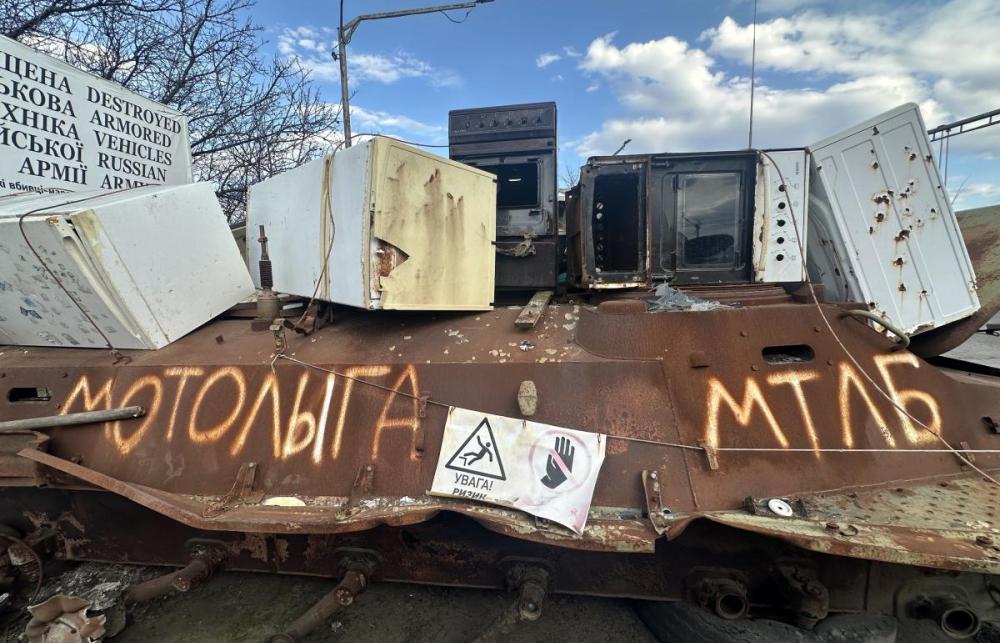
Destroyed Russian armoured vehicle, Ukraine

Related research themes

Digital participation › Drone ecology and AI war ›

Digital participation

How do smart devices and platforms enable allcomers to participate in warfare?

Digital technologies have liberated production and distribution from the mainstream, empowering every individual and giving voice to an astonishing array of ideas, opinions and experiences. War is located in and through messaging apps and platforms. Individual locating and targeting, surveillance, psychological operations, trolling, and disinformation, are all enabled through digital networks, streams and archives. These aspects of war thrive precisely because of the rapid growth in the recording and sharing of all those on the battlefield, and their clicking, swiping, linking, liking, emoting, sharing stories, messages, images, memes and videos.

These forms of war have never been so plentiful, pouring today from the battlefield from militaries, soldiers, journalists, states, NGOs, citizens, artists — weaponizing the smartphone and satellites — and which overwhelm in their sheer scale, seemingly beyond human apprehension. But war is also produced and distributed through a frenzy of participation, a stream of commentary, emojiing, linking, chatting, liking and so on that creates a new complex layer of mediation and interpretation, which continuously (re)personalises and (re)mixes media content of all kinds.

This project will show how participative war, new ‘architectures of participation’ (O’Reilly, 2004) offered by Web 2.0 platforms and connected and mobile media devices enable a wide range of actors to have their say and participate in warfare in an immediate and ongoing fashion.

It investigates Telegram as a unique and emergent platform of participation in the 2022– Russian war against Ukraine. This project treats the scale — the sheer volume of messages, images and videos — as both the subject matter that provokes this work (it facilitates new forms and experiences of warfare) and the opportunity (it enables new kinds of thinking and methods in revealing the character of new forms and experiences of warfare).

This project investigates the war in Ukraine being the least and yet most sanitised war in history. Never have so many images and videos of the suffering, injured, captured, mutilated and the dead, civilians and soldiers, been so immediately and easily available from a war zone. These are used as a digital instrument of psychological warfare. For example, a stream of graphic posts on some channels on the messaging platform Telegram are accompanied with comments and emojiis, laughing, celebrating capture, injury and death. This is part of the new participative layering of mediation and interpretation of war.

Read an introduction to participative war here

Read Boichak and Hoskins’ introduction to their special issue on participation in war here

Destroyed Russian armoured vehicle, Ukraine

Related research themes

Drone ecology and AI war › Remembering and forgetting war ›

Project Launch Symposium: The War Image: The ethics of showing, seeing and sharing war

9 January 2026, University of Edinburgh

This symposium brought together leading artists and scholars to explore the nature, uses and effects of the war image in an era of digital overload. Speakers included: Mark Neville (artist, Kyiv); Lesia Kulchynska (curator and researcher, Amsterdam); Lilie Chouliaraki (prof of media and communications, LSE); William Merrin (associate prof. of media studies, Swansea University) and Andrew Hoskins (prof. of AI, memory & war, Edinburgh).

What is the role of the artist, the photograph, and humanitarian communication in wars defined by the digital flux and saturation of images? Has digital participation and instant connectivity illuminated or obscured war’s human experience and costs? How are colonial technologies of vision and image-making translated into the realm of automated decision making? And after digital war is all that is left only more traumatic memory or something salvageable for remembrance, justice and accountability?

This symposium launched Prof. Andrew Hoskins’ project WARSHARE: The New War Front: Digital Participation in War (UKRI HEu ERC Advanced Grant EP/Z53335X/1).

Recorded presentations


Speaker details

Professor Andrew Hoskins, University of Edinburgh

High Definition War. Who knows or cares about the war image?

Andrew Hoskins holds a personal chair in AI, Memory & War at the University of Edinburgh.

He leads a new ERC awarded/UKRI funded €2.27M project WARSHARE: The new war front: digital participation in war (2025–30) focusing on the Russian war against Ukraine. He is founding Co Editor-in-Chief of the Cambridge Journal of Memory, Mind & Media and founding Editor-in-Chief of the Journal of Memory Studies.

Mark Neville, Kyiv

In a rare appearance outside of Ukraine, and showing never seen before images and film excerpts, Kyiv-based British artist Mark Neville will talk about his current work that symbiotically fuses humanitarian aid deliveries with his documentary art practice. In a presentation that takes in his last two Ukraine-based photobook projects, the pre-war ‘Stop Tanks with Books’ and the latest publication ‘Diary of a Volunteer’ — made as part of his hybrid art and aid project ‘Postcode Ukraine’ — Mark will outline plans for a new book project, a collaboration with Professor Andrew Hoskins.

Professor Lilie Chouliaraki, LSE

From platforms to prompts. Rethinking humanitarian communication in the age of platforms and AI.

Illiberal political forces imposing cultures of violence, cruelty and expulsion are gaining force both the Global South and increasingly in the liberal global North. In this context, it becomes urgent to examine how humanitarian communication — the communication of vulnerable humanity as a cause for action — might still cultivate a civic imagination in which we can begin to feel and understand what it means to be human beyond our European, predominantly white, humanity. To this end, I offer critical reflections on posthumanitarianism, a dominant style of humanitarian communication defined by its abandonment of attempts to represent vulnerable humanity as a historical condition rooted in the structural violence and enduring inequalities that marked the postcolonial Global South.

While earlier, yet still pervasive, forms of humanitarianism rely on platform-driven digital aesthetics that centre western donors as benevolent consumers prompted to click like, upload and shop, emerging AI-generated representations of human suffering intensify this platform logic and its playful digital aesthetics but now also introduce an unsettling layer of colonial photorealism. Confining engagement to mobile screens, lifestyle-oriented actions and familiar tropes of the past, posthumanitarianism prioritises self-gratification over critical understanding, thereby reproducing hierarchies between those living in stability and those denied safety, dignity and recognition. Against this dynamic, we must continue our efforts to imagine and represent vulnerable humanity in ways that resist both the self-centred playfulness and the revived colonial tropes of posthumanitarianism and that reopen possibilities for meaningful care and just action beyond the confines of our immediate lifeworlds.

Lilie Chouliaraki is Professor of Media and Communications at the London School of Economics and Political Science. Her research explores the ethical and political complexities of communicating human suffering, focusing on disaster news, humanitarian and human rights advocacy, war and conflict reporting and migration news. Her books include, among others, The Spectatorship of Suffering (2006), The Ironic Spectator: Solidarity in the Age of Posthumanitarianism (2013, ICA Outstanding Book Award 2015); The Digital Border. Mobility, Technology, Power (2022) and Wronged. The Weaponization of Victimhood (2024, ICA Outstanding Book Award 2025, and ICA Philosophy, Theory and Critique Division Best Book Award 2025).

Dr. Lesia Kulchynska, University of Amsterdam

From Hacked Profiles to Hacked Bodies: Participatory War and its Coercive Dimensions

Hacking social media to simulate social dynamics was a trademark of the Kremlin propaganda since a notorious troll farm, Internet Research Agency (IRA), was established in 2013. IRA’s initial task was to fight Putin’s opposition, substituting the expression of social discontent in the Russian online spaces with the staged demonstration of popular love for the dictator. This expertise in faking reality became a crucial weapon during the war with Ukraine. With the recent campaigns, such as Doppelganger, Matryoshka, or Operation Overload, based on the strategy of hacking and mimicking the pages, profiles, and images of real individuals and institutional actors to express pro-Kremlin narratives, the Russian simulation machine entered international digital space, prompting numerous researchers to portray Russia as the global epicenter of disinformation innovation in the age of participatory media.

Yet, what is often overlooked by the existing accounts on Russian propaganda is that it is not limited to faking the media representations, but is engaged in editing the physical reality itself. In my talk, I will look at how the Russian propaganda logic of faking and hacking the profiles developed into the practice of hacking the bodies, proposing to think of the Russian war against Ukraine as a violent simulation machine targeted at forceful adjustment of matter to the hollow signifier of propaganda.

Lesia Kulchynska is a curator and researcher in media and visual studies, currently based in Amsterdam. She holds a PhD in Film Studies and has worked as a researcher at the Pinchuk Art Center and as a curator at the Visual Culture Research Center and Kyiv Biennial in Kyiv. She taught courses on Media and Communication Studies at the National University of Kyiv-Mohyla Academy, Kyiv Academy of Media Arts, and John Cabot University (Rome). In 2018/2019, she was a Fulbright Scholar at New York University (NYC, US), where she worked on violent responses to art, studying cases of banned and attacked exhibitions in Ukraine. She was also a postdoctoral fellow of Bibliotheca Hertziana – Max Planck Institute of Art History (Rome, Italy) from 2022 to 2024, and a fellow of the Netherlands Institute of Advanced Studies (2024–2025), where she investigated the networked visuality of violence during the Russo–Ukrainian War.

Dr. William Merrin, Swansea University

The age of environmental necro-tech

William Merrin is Associate Professor of Media Studies at Swansea University, UK. He is the author of: Digital War (Polity, 2018), Media Studies 2.0 (Routledge, 2014), and Baudrillard and the Media (Polity, 2005), co-author of Sharded Media: Trump’s Rage Against the Mainstream (Palgrave, 2025) and co-editor of Trump’s Media War (2019) and Jean Baudrillard: Fatal Theories (Routledge, 2009).

Contact us

Principal Investigator

Professor Andrew Hoskins
Chair in AI, Memory & War
University of Edinburgh

Email us at andrew.hoskins@ed.ac.uk

Funded by & in partnership with
UK Research and Innovation CASM

Privacy and Cookies

Last updated: 17 January 2026

SPS Privacy Statement

This privacy statement explains how this website, as part of the University of Edinburgh’s School of Social and Political Science collection, collects, uses, and protects your data in compliance with the UK General Data Protection Regulation (UK GDPR).

1. Data Collection and Use

The website does not collect personal data from visitors. The only user data stored is for site editors, which includes usernames and email addresses.

Visitors can contact the site owners via a mailto: link, which does not collect or process personal data.

The website may use Google Analytics, which can be opted out of using the Cookie notice displayed on the home page. However, basic visitor data (including IP addresses) is logged via the inbuilt cPanel analytics system. This data is only accessible to the school Web & Systems team for technical support and information security purposes.

No third-party plugins are used to collect user data.

2. Data Processing and Retention

Data is managed by the school Web & Systems team, which can be contacted at sps.support@ed.ac.uk.

Website records are retained for a maximum of three years, with backups stored for six years.

No personal data is shared with third parties.

3. Cookies and Tracking

The site uses session cookies to support essential functionality. These cookies do not track users or collect personal data.

Users have the option to opt out of all non-essential cookies (including Google tracking) via a built-in consent mechanism.

4. Legal Basis for Processing

Data processing is conducted under the legitimate interest of maintaining website security and functionality.

5. Contact and Further Information

For any questions regarding this privacy policy, please contact the school Web & Systems team at: sps.support@ed.ac.uk.

Web Accessibility

Last updated: 17 January 2026

Web Accessibility Statement

This privacy statement explains how this website, as part of the University of Edinburgh’s School of Social and Political Science collection, collects, uses, and protects your data in compliance with the UK General Data Protection Regulation (UK GDPR).

1. Data Collection and Use

The website does not collect personal data from visitors. The only user data stored is for site editors, which includes usernames and email addresses.

Visitors can contact the site owners via a mailto: link, which does not collect or process personal data.

2. Data Processing and Retention

Data is managed by the school Web & Systems team, which can be contacted at sps.support@ed.ac.uk.

Website records are retained for a maximum of three years, with backups stored for six years.

No personal data is shared with third parties.

3. Cookies and Tracking

The site uses session cookies to support essential functionality. These cookies do not track users or collect personal data.

Users have the option to opt out of all non-essential cookies (including Google tracking) via a built-in consent mechanism.

4. Legal Basis for Processing

Data processing is conducted under the legitimate interest of maintaining website security and functionality.

5. Contact and Further Information

For any questions regarding this privacy policy, please contact the school Web & Systems team at: sps.support@ed.ac.uk.